Blog | Reading Time 3 minutes
Looking back at International Silage Conference in Florida where Lallemand Animal Nutrition Showcases Research
Lallemand Animal Nutrition proudly presented a series of innovative research posters at the International Silage Conference (ISC) held in Florida in July 2025. These studies highlight our commitment to advancing forage preservation and animal nutrition through science-driven solutions.
Inoculant effects on bacterial community, VOC production, aerobic Stability, and Fiber Degradability of Alfalfa-Grass Silage
Authors: Richard A. Scuderi, Pascal Drouin, Érica Benjamim da Silva, and Eric Chevaux
This study evaluated an inoculant containing Lentilactobacillus buchneri, L. hilgardii, Pediococcus pentosaceus, xylanase, and beta-glucanase on alfalfa-grass silage (36% DM). Compared to untreated and chemically treated silages, inoculation dominated the bacterial community, increasing Lentilactobacillus and Pediococcus abundance. Higher levels of 1,2-propanediol confirmed metabolic activity of heterofermentative LAB. Inoculation accelerated lactic acid production and acidification, improving aerobic stability after 5 days. VOC analysis revealed reduced spoilage markers (acetone, esters) and lower yeast counts. After 160 days, inoculated silage showed superior fiber degradability at 48h and 240h. Overall, inoculation promoted faster fermentation, reduced spoilage-associated VOCs, and improved aerobic stability and fiber digestibility.
Effects of inoculated corn silage on fermentation, aerobic stability, and feed preference in Holstein heifers
Authors: Richard A. Scuderi, Ashley Barkley, Jered Green, Alex Pape, Catherine Ballard, and Mathieu Castex
Corn silage treated with a multi-strain inoculant was compared to untreated silage over 187 days. Fermentation profiles were similar, but inoculated silage had lower yeast counts, higher 1,2-propanediol, and improved aerobic stability. Feeding trials with Holstein heifers showed preference for inoculated silage after 24h aerobic exposure, indicating inoculants enhance palatability under challenging conditions. This suggests inoculants not only stabilize silage but also influence feed preference, supporting their role in improving intake and reducing spoilage losses.
Extraction technique influences recovery of volatile fatty acids in corn and grass alfalfa mixed silage
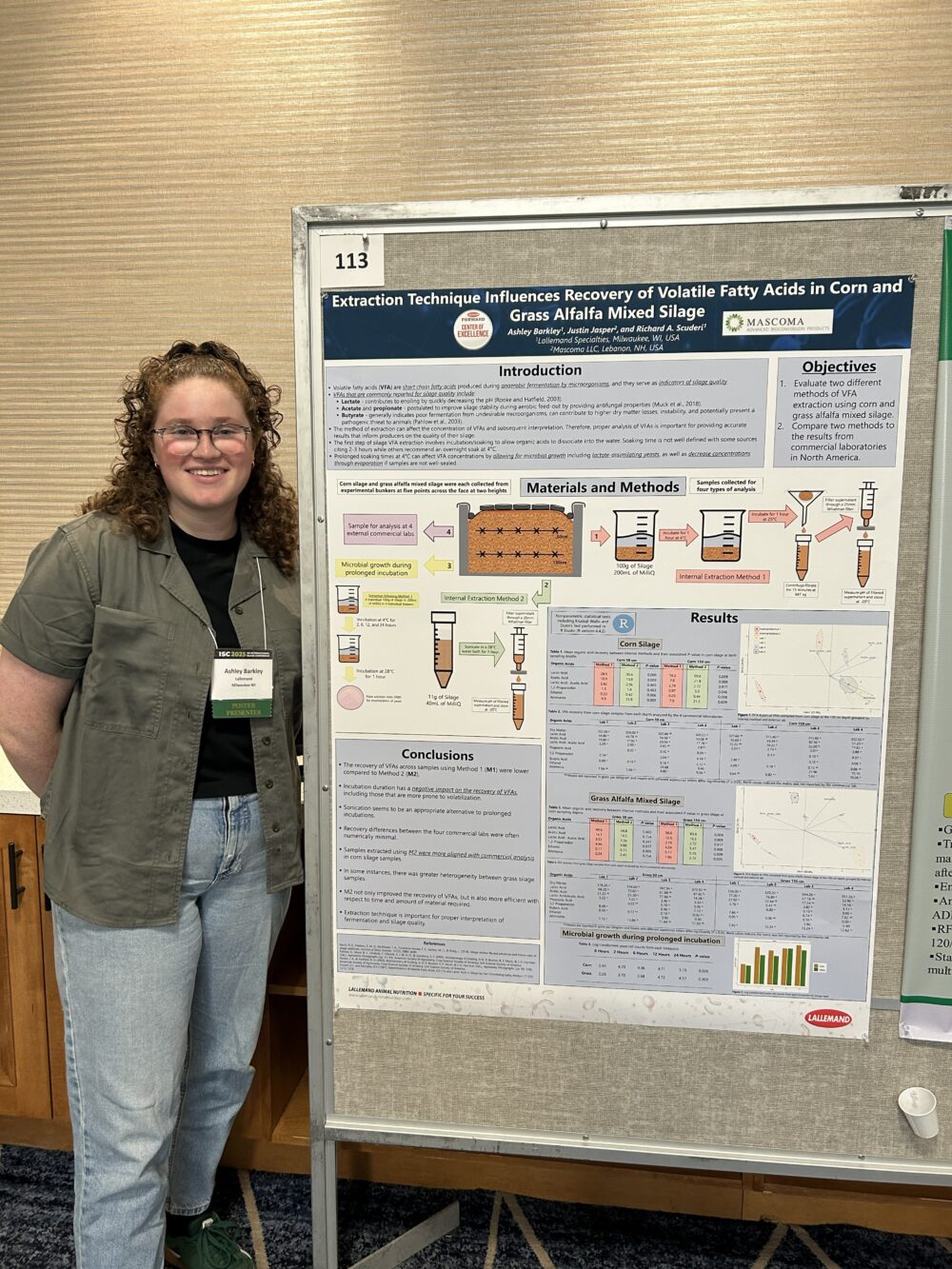
Authors: Ashley Barkley, Justin Jasper, and Richard A. Scuderi
Two VFA extraction methods were compared on corn and grass-alfalfa silages. Method 2 (sonication) recovered higher concentrations of lactate, acetate, and ethanol, aligning closely with commercial lab results, while Method 1 (prolonged incubation) showed lower recovery and increased yeast counts. Findings highlight that extraction technique significantly impacts VFA analysis and interpretation of silage quality, emphasizing the need for standardized protocols.
Unraveling Silage Fermentation with Metagenomics and Metabolomics
Authors: Richard A. Scuderi
This lead presentation introduced omics-based approaches—metagenomics, metabolomics, transcriptomics—to study silage microbiomes. These tools reveal microbial diversity and functionality, linking species presence to fermentation roles. Multi-omics integration enables comprehensive insights into gene expression, protein profiles, and metabolite production. Despite technical challenges, omics will shape next-generation silage strategies, improving feed quality and addressing complex microbiological questions.

Effects of environmental conditions and management practices on epiphytic microorganisms of mixed grasses and alfalfa
Authors: Ashley Barkley and Richard A. Scuderi
This study monitored microbial communities on mixed grasses and alfalfa across a growing season. LAB abundance correlated with temperature and fiber content, while fungi were influenced by dry matter and fertilization. Salmonella and E. coli were undetected. Results underscore the variability of epiphytic microbes and their dependence on environmental and management factors, suggesting tailored silage strategies and further metagenomic research.
Performance of Holstein cows fed diets containing corn silage treated with a multi-strain silage inoculant
Authors: Heather M. Dann, Cari A. Reynolds, Sarah Y. Morrison, Catherine S. Ballard, Richard A. Scuderi, and Richard J. Grant
Forty-six Holstein cows were fed diets containing either untreated or inoculated corn silage (Magniva Platinum 3) for 9 weeks. While cow performance metrics remained similar, inoculated silage showed improved aerobic stability and reduced spoilage losses (16.4% vs 28.6%), resulting in more feedable material. This supports inoculant use as a strategy to maintain silage quality and optimize inventory utilization.
Effect of the inoculant and grass baleage dry matter on fermentative and nutritional profiles
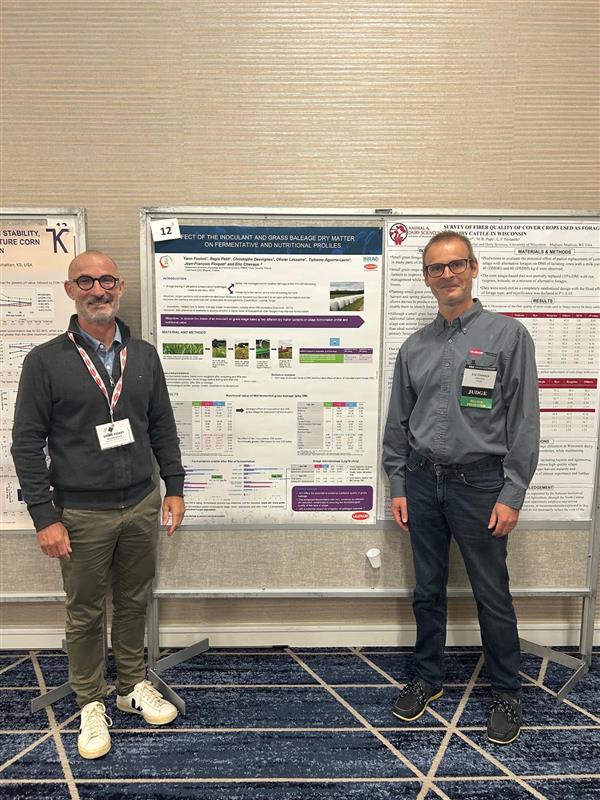
Authors: Yann Foufon, Regis Petit, Christophe Desvignes, Olivier Lasserre, Tiphaine Aguirre-Lavin, Jean-François Floquet, and Eric Chevaux
Grass baleage with varying dry matter (DM) was treated with different inoculant doses. Higher inoculant rates improved fermentation profiles, reduced yeast and mould growth, and enhanced nutritional quality, particularly in low DM bales. Findings confirm that adjusting inoculant dose according to DM is essential for maintaining forage hygiene and optimizing baleage quality under challenging conditions.
These studies confirm that inoculants and advanced microbiological insights are key to improving silage quality, stability, and overall feed efficiency—helping farmers optimize forage management and animal performance.
Want more information?
Discover our global portfolio of silage solutionsPublished Jan 27, 2026