Blog | Reading Time 5 minutes
Maximise winter rations with Levucell SC
Following a challenging spring and summer, many farmers are dealing with varied silage quality. Effective winter ration management from the clamp to the cow is crucial for consistent and efficient milk production.
Assess forage quality and quantity
It’s important to undertake an analysis of your forages to gain an accurate picture of their quality. Trouw Nutrition’s silage analysis results reflect the challenge, showing a higher fibre index, lower digestibility (D-value), and reduced metabolisable energy (ME) compared to last year’s first cut.
Having lower digestibility silage can restrict milk from forage potential, but things can be done to improve forage utilisation and feed efficiency.
Measuring silage clamps and assessing the quantity of forages available is important. Start planning for winter as early as possible, which should help you achieve consistent, efficient milk production in a financially and environmentally sustainable way.
Manage silage clamps
Pay close attention to clamp management and aim to feed a consistent ration every day.
To achieve this while minimising waste, feed out in a vertical column from the clamp to ensure silage quality is consistent in every mix.
Aim to move across the whole clamp face in less than three or four days. With very wide clamp faces, take shallower grabs rather than full grabs. This will help to avoid silage being exposed to oxygen for too long, which can worsen the aerobic stability of the silage.
You may have silage quality or dry matter that differs significantly between cuts, but fermentation quality is good thanks to appropriate inoculant use. In this case, feed more than one cut at once for better diet consistency, even if it means opening another clamp.
Optimise winter ration delivery
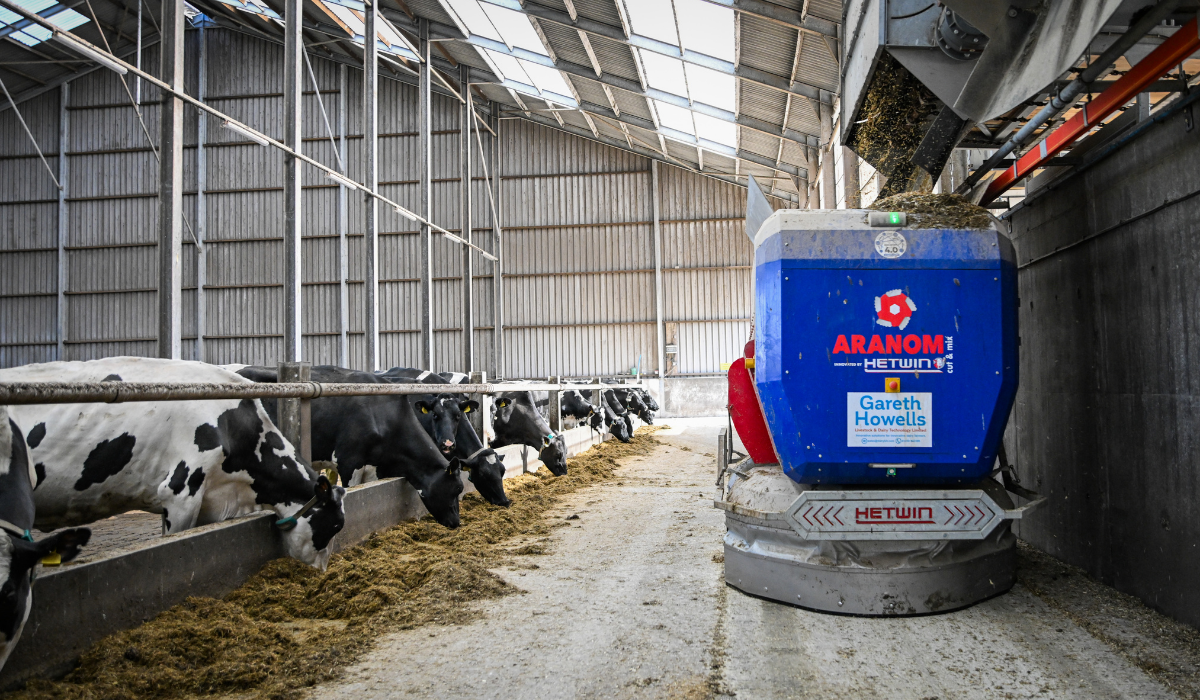
How the ration is delivered should be another area of focus. Feed out wagon mixed rations between milkings, not at milking time. This increases feeding bouts and can improve feed efficiency by as much as 7%.
Pushing feed up regularly and feeding twice a day or more increases dry matter intake and reduces sorting. This leads to increased lying time and improved rumination activity.
Enhance feed efficiency with Levucell SC
Adding a proven rumen modifier to the ration unlocks more energy from fibre and gets more out of the diet overall.
Including a rumen modifier will prove particularly beneficial this year. It will help to compensate for any shortcomings in the digestibility of forage cost-effectively. In research trials, depending on the acid load level of the diet, the NDF digestibility of grass silage in the rumen increased by 5-9% in the presence of the rumen-specific live yeast, Levucell SC. This increases feed efficiency and milk yield.
Farmer Insight
Gethin and Eleri Gibbin milk 350 autumn-calving cows across 202 hectares at Drefach Farms near Whitland in Carmarthenshire. Cows are yielding 10,000 litres at 4.45% butterfat and 3.45% protein annually, with milk sold to Leprino.
“Local regional business manager Anwen [Jones] recommended we use Levucell SC Rumignition because it is a three-in-one product containing live yeast, an acid buffer, and a mycotoxin binder. We are very happy with the results.
“We have been using it for the past three years. Because we are feeding wholecrop and maize to cows as part of our winter TMR, we’ve been using it as an insurance policy to mitigate potential mycotoxin threats.
“The yeast improves forage utilisation, and the acid buffer evens out the concentrate load in the ration.
“It is usually fed at 25g per cow per day, but this winter, I fed 40g per cow per day because we had a bad starling challenge.
“We are very happy with the results. We have seen a healthier herd throughout the winter. The cows have performed really well, averaging 38 litres per cow per day. Furthermore, we have had no stomach problems, and dung consistency has improved.”
Practical benefits of Levucell SC
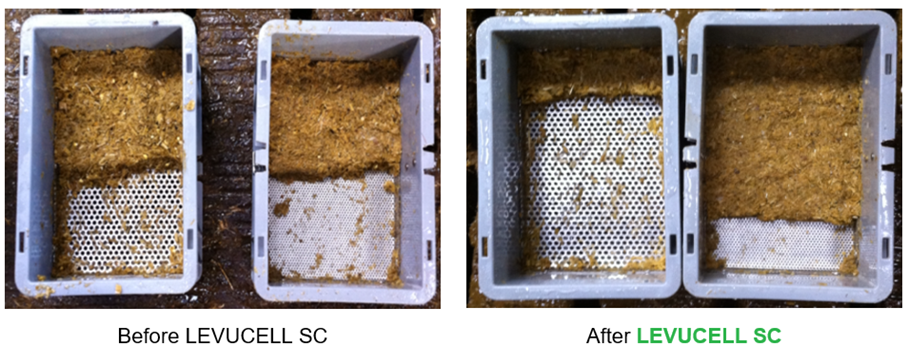
Adding Levucell SC to ruminant diets maximises rumen function. Manure sieving before and three weeks after introduction typically shows improved fibre digestion, provided there hasn’t been any significant change in ration composition. Producers often report dairy cows having better resting and ruminating behaviour, body condition, cleanliness (especially at grass), and manure consistency.
Return on investment with Levucell SC
Results from 14 trials in mid to late lactating dairy cows (1,615 animals) show an average improvement in feed efficiency of 50g of extra fat-corrected milk per kilo of dry matter intake from including Levucell SC in the diet. There was a corresponding increase in milk production of 1.1kg per day.
Fed before calving, the yeast reduces body weight loss and promotes early lactation feed intake. Combined with improved feed efficiency during lactation, this can improve milk yields by up to 8%. This can make a significant contribution to sustainable milk production.
Results from 5 trials in transition dairy cows showed an average increase in dry matter intake of 1.5kg during the first 30 days in milk. There was a corresponding increase in milk production of 2.3kg per day. There was also a reduction in bodyweight loss of 0.7kg per cow per day.
Need some help?
Contact our teamPublished Dec 2, 2025 | Updated Jan 27, 2026