Blog | Reading Time 5 minutes
Study links heat stress to increased environmental impact of milk production and highlights nutrition as a key mitigation lever
As climate changes, managing heat stress in dairy herds is both a farm performance and animal welfare issue. Heat-stressed cows eat less, ruminate less and divert energy from dairy production to thermoregulation. The consequences are well known and scientifically documented: reduced milk yield, lower feed efficiency, increased acidosis risk, higher somatic cell counts and, in the long term, drops in fertility. Beyond the direct impact on farm profitability, the economic toll is staggering — global annual losses have recently been estimated to exceed 10 billion USD (IDF, 2025). Heat stress also impacts the environmental footprint of milk production, as more resources are consumed to produce less milk.
New data brings a fresh perspective on probiotic yeast, documented to improve rumen function, showing that it can influence the performance and welfare of cows and also the environmental footprint of milk production.
Managing heat stress = managing the rumen
Agriculture contributes about a quarter of global greenhouse gas (GHG) emissions, and ruminants account for about 40% of that share. Improving feed efficiency — especially under challenging conditions such as heat stress — is a lever to help reduce emission intensity per kilogram of milk.
However, heat stress pushes cows in the opposite direction. When the Temperature-Humidity Index (THI) exceeds 68 to 70, cows typically:
- Reduce dry matter intake
- Spend less time ruminating
- Face higher risks of rumen pH depression
- Show reduced fiber digestibility
- Produce less milk at lower fat content
A recent publication (Onan-Martinez et al., 2026) establishes a direct link between heat stress and a higher environmental footprint of milk. The authors showed that heat stress impairs rumen function, degrades productivity and consequently increases methane emissions per kilogram of feed intake, as well as per kilogram of milk produced (methane intensity).
A controlled study conducted at the University of Florida by Dr Santos’s group (Perdomo et al., 2020) under heat stress conditions (THI ≈ 80) evaluated how managing the rumen with the specific live yeast Saccharomyces cerevisiae CNCM I1077 (LEVUCELL SC) can help cows be more resilient to heat stress. A recent Life Cycle Assessment (LCA) performed using ISO conformant methodology enabled the determination of the environmental footprint of 1 kg of fat and protein corrected milk (FPCM) under these conditions (LEVUCELL SC EPD, Lallemand).
The performance evaluation (Figure 1) showed a 7.6% improvement in feed efficiency (+130g of milk/kg DMI) without nutrient dilution. The same dataset has now been used to conduct a Life Cycle Assessment (LCA) of milk production with and without LEVUCELL SC.
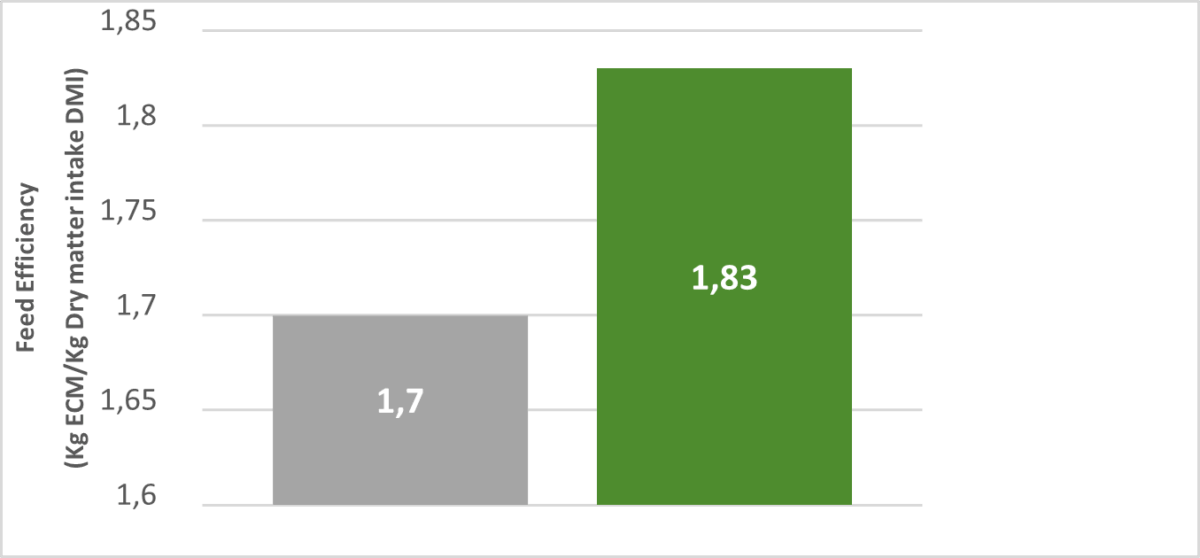
Figure 1: Effect of LEVUCELL SC supplementation on dairy cows feed efficiency (Kg ECM/Kg dry matter intake) under heat stress conditions (Perdomo et al, 2020).
New LCA insight: Reducing the environmental footprint of milk
An ISO conformant LCA (ISO 14040 / 14044), including the heat stress trial in Florida was conducted from cradle to farm gate (Figure 2) (LEVUCELL SC EPD, Lallemand). The LCA followed the Product Environmental Footprint Category Rules for Feed (PEFCR Feed) and the PEFCR Dairy methodology.
This ISO LCA report was reviewed by Greg Thoma, PhD, independent expert and Director of Agricultural Modeling and Life Cycle Assessment at AgNext, Colorado State University.
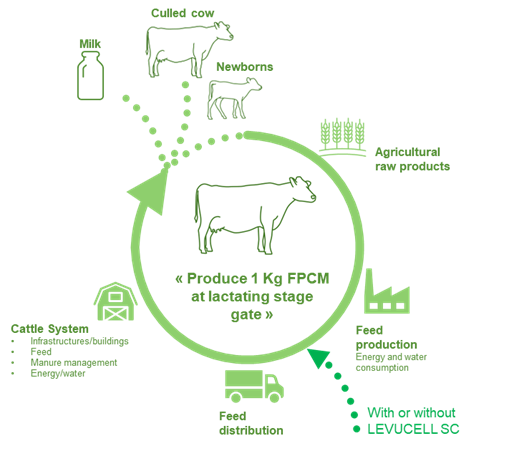
Figure 2: Scope of LEVUCELL SC Life Cylce Assessment study, from cradle to farm gate.
This study showed that the carbon footprint of milk (per 1 kg FPCM) decreased by 6.1% when cows were fed LEVUCELL SC even while under heat stress.
Moreover, across the seven environmental indicators selected by PEFCR Dairy as key all showed reductions (from 4.9% to 8.3%, Figure 3). These reductions stem primarily from higher feed efficiency and improved milk yield, as fewer resources and emissions were needed per unit of output.
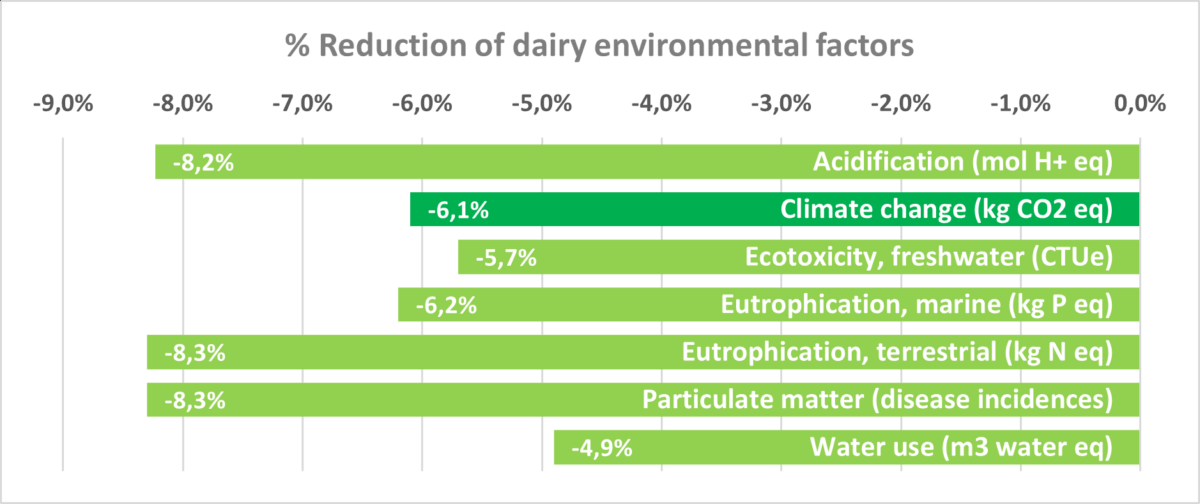
Figure 3: Effect of LEVUCELL SC supplementation on 7 PEFCR Dairy environmental factors of milk production under heat stress conditions (LEVUCELL SC Product Environmental Declaration, 2026).
Why this matters for dairy production?
Beyond the challenges of agricultural raw material production, heat stress is becoming a major constraint of global dairy production. Traditional mitigation strategies — shade, cooling, ventilation, etc. — are essential. Now, nutritional strategies should also be considered for a more holistic approach.
Our results confirm that nutritional solutions that improve rumen stability and feed efficiency during challenging conditions can also bring additional sustainability benefits by:
- Mitigating productivity losses without increasing resource use
- Reducing milk production environmental footprint, especially GHG emissions intensity at a time when dairy producers face increasing demands from dairy industry and consumers
- Contributing to animal welfare, which is also an increasing demand from the dairy market
Improving rumen efficiency can enhance feed utilization, helping dairy producers improve productivity and reduce the environmental footprint per unit of milk produced. When economically viable, such approaches can support farm profitability and resilience in the face of milk price volatility and increasing societal and market expectations.
The Florida 2020 trial demonstrates that feeding LEVUCELL SC during heat stress events can help maintain dairy cows’ rumen efficiency, fiber digestion and feed conversion. The LCA shows that these improvements translate into lower environmental impacts per kilogram of milk produced, in particular a 6.1% reduction in carbon footprint.
In a context of rising temperatures, such insights highlight the potential role of rumen microbial management as one of several levers to improve feed efficiency and reduce emissions intensity in dairy production.
References
- Bulletin of the IDF N°534/2025: Managing Heat Stress in Dairy Cattle
- LEVUCELL SC Product Environmental Declaration (EPD) Dairy Production Phase Cradle to Farm gate (Lallemand Animal Nutrition).
- Onan-Martinez, D., De Bari, M., Olmo, H., Vyas, D., DeGuzman, C. N., Santos, J., . . . Dahl, G. (2026). Heat stress increases enteric methane emissions yield and intensity while impairing rumen function and productivity in lactating dairy cattle. Journal of Dairy Science. https://doi.org/10.3168/jds.2025-27724
- Perdomo M.C., R.S. Marsola, M.G. Favoreto, A.T. Adesogan, C.R. Staples, J.E.P. Santos. (2020). Effects of feeding live yeast at 2 dosages on performance and feeding behavior of dairy cows under heat stress. J. Dairy Sci. 103(1):325-339
Published Mar 31, 2026