Blog | Reading Time 1 minute
Balancing Act: Tackling Oxidative Stress with Superoxide Dismutase–Rich Dried Melon Juice and Selenium-Enriched Yeast
Monika Leukert, product manager for Antioxidative Solutions and Yeast Derivatives at Lallemand Animal Nutrition, answers questions on oxidative stress and its consequences for animals.
Imagine a constant battle inside every cell between harmful molecules and the body’s built-in defense squad. This is oxidative stress in action. Scientifically speaking, oxidative stress occurs when there’s an imbalance between reactive oxygen species (ROS) – highly reactive molecules produced during normal cellular metabolism – and the body’s capacity to neutralize their effects using antioxidants.
ROS are not inherently bad – they are natural by-products of energy production in mitochondria. Under normal conditions, cells have defense mechanisms to keep ROS in check. However, when ROS levels spike – due to factors like dietary toxins, metabolic disorders, inflammations, medications, aging and thermal stress – these defenses can be overwhelmed leading to oxidative stress.
Why Does it Matter? The Cellular Consequences.
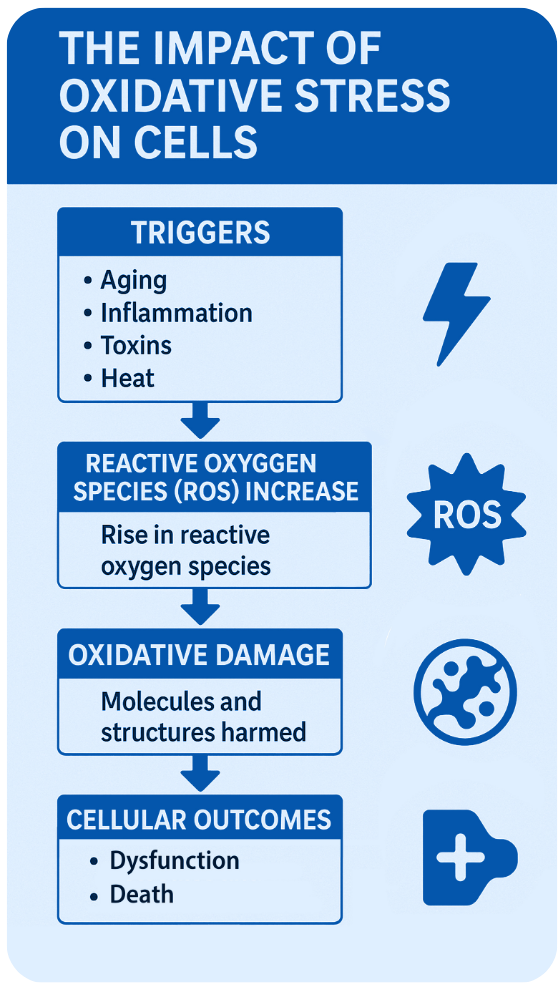
Oxidative stress is more than just a buzz word. It has a profound implication for cellular health. Elevated ROS can damage mitochondria, disrupt energy production, destabilize cell membranes, impair protein function, mutate DNA, and activate the immune system. Over time, this cellular chaos can trigger chronic inflammation, even lead to cell death, increasing susceptibilities to various diseases and pathological conditions.
To combat this, the body relies on a sophisticated network of antioxidants. Primary antioxidants like superoxide dismutase, catalase, glutathione peroxidase are enzymatic powerhouses that metabolize ROS into water and oxygen. Secondary antioxidants including vitamins C and E act as scavengers, neutralizing free radicals before they cause damage. Together, they form an antioxidant defense system.
Nature’s Defence System : Nutritional Strategies
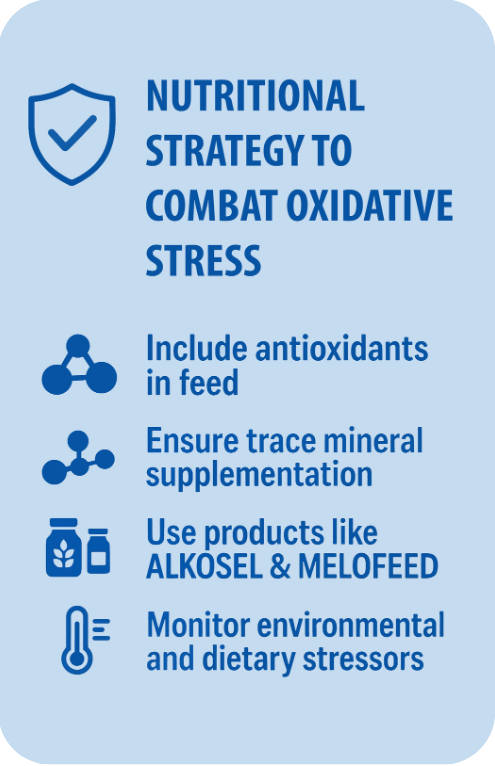
Modern animal nutrition has embraced antioxidant supplementation as a frontline defense. Secondary antioxidants are now common additions to almost all animal diets offering to buffer oxidative stress. Trace minerals are also supplemented as they are important co-factors for primary antioxidants.
At Lallemand, innovation meets science in products like ALKOSEL, the selenium-enriched yeast that provides highly bioavailable organic selenium. This trace element is crucial for glutathione peroxidase production, an important antioxidant enzyme.
Similarly, MELOFEED, containing dried melon juice rich in superoxide dismutase, stimulates the production of antioxidant enzymes in the cells supporting the antioxidant defense system directly in the mitochondria.
Defending from Within
A well-rounded antioxidant strategy isn’t just a nutritional luxury – it’s a biological necessity. Implementing a comprehensive antioxidant strategy can help maintain cellular balance and mitigate the negative effects of oxidative stress. In a world full of stressors, giving animals the tools to fight back from within is a game-changer.
Watch the full interview
Published Aug 20, 2025 | Updated Aug 27, 2025