Blog | Reading Time 1 minute
Maize silage feeding after drought condition – part 3/3
IV. Yeasts, molds and mycotoxins risks
- In drought conditions there is a significantly higher risk of yeast contamination . In a US trial 28% of 183 drought affected maize samples had yeast counts above 10,000,000 CFU/g.
- Risk of decreasing feed intake due to alcohol production, DM losses, reduced energy and high nitrate content.
- Risk of aerobic instability and heating of the forage when opened. High levels of sugar available. A high sugar content in silage is more susceptible to heating than a high starch content.
- Drought stressed plants are more vulnerable to mold contamination and higher mycotoxins risks.
Solutions and recommendations:
- Silage feed out management:
- Do not uncover more of the silo than will be fed daily.
- Remove sufficient silage to prevent silage heating > 20 cm.
- Do not allow silage to sit in loose piles for long periods, as it may start to deteriorate.
- Remove silage from the silo immediately before feeding.
- Use an appropriate toxin binder to deal with potentially high mycotoxin levels.
- Use of an heterofermentative bacterial inoculant will help prevent yeasts, molds and mycotoxin development in the silage.
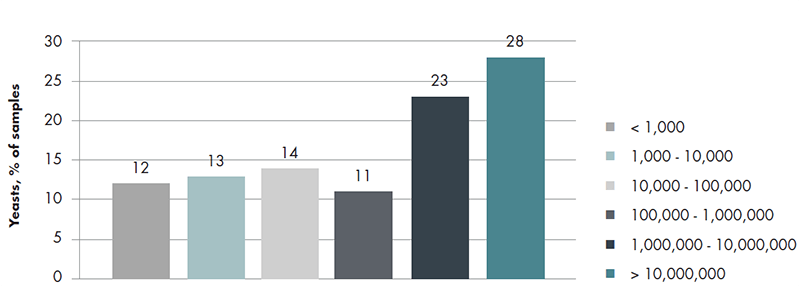
Figure 1: Yeast contamination (n=183, Jul-Sept 2012, Dairyland Labs).
Published Dec 5, 2018 | Updated May 30, 2023
Forage Inoculant