Blog | Reading Time 4 minutes
Farmer experience: prioritising sow gut health to promote efficient sow performance
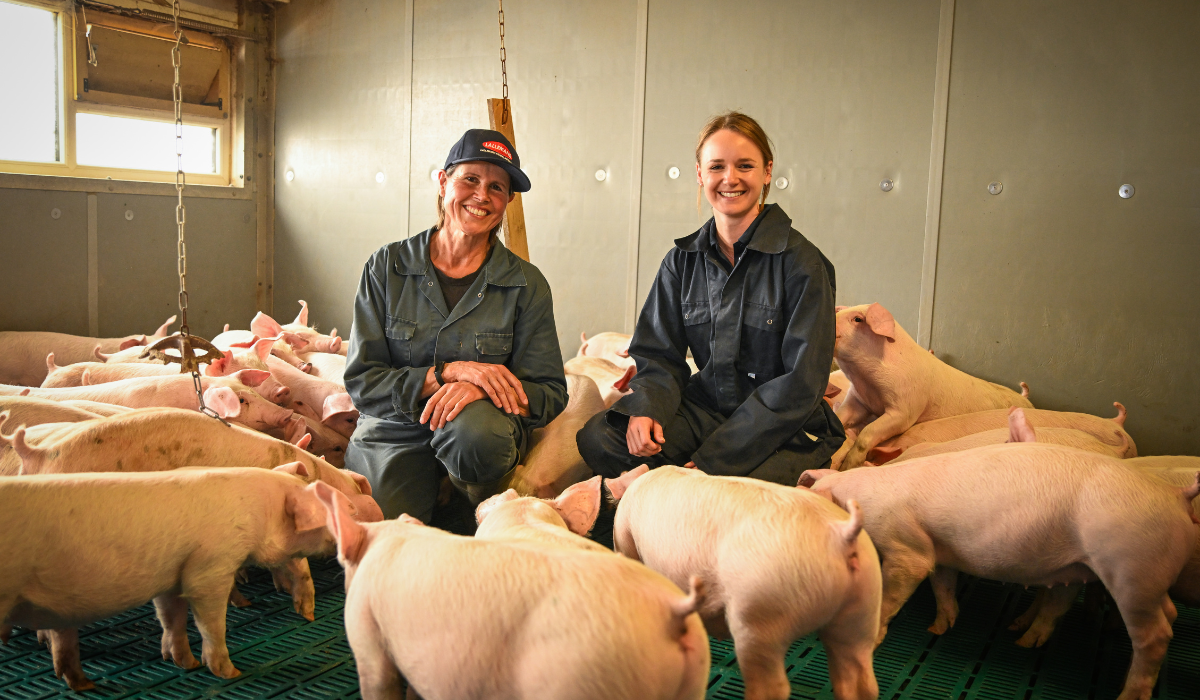
In the heart of North Derbyshire, the Thompson family farm is proving that attention to detail, proactivity, and animal productivity go hand in hand. Through diversified farming, minimal antibiotic use, and a strong focus on gut health, including the use of probiotic supplements, the family has built a thriving, future-ready business.
A fourth-generation farm with a modern approach
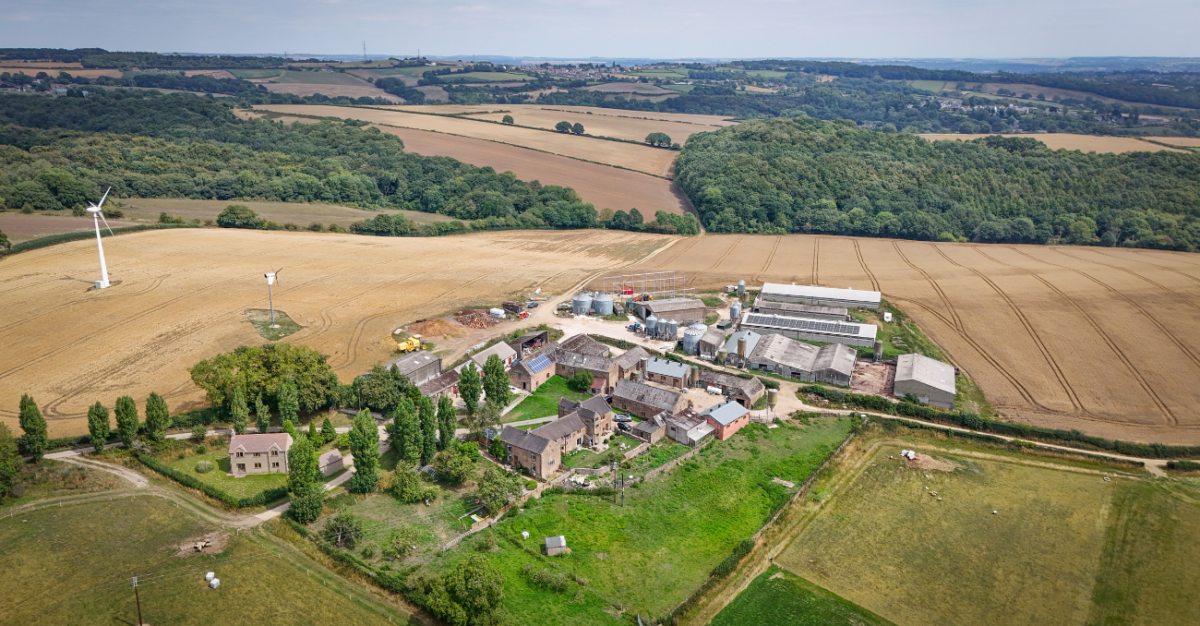
The Thompson family has farmed in the valley since the 1890s. Today, Karen and Stephen Thompson run the operation alongside their son Oliver, making it a true family enterprise. Spanning 230 acres, the farm includes 200 acres of arable land, 30 acres of ancient woodland, and an additional 20 acres farmed off-site.
The herd consists of 200 Large White cross Landrace indoor breeding sows, in a closed herd system. Replacements are bred through AI, and pigs are finished at 120–130kg liveweight.
Sustainable crop and feed management
The farm grows feed wheat, barley, and rye, with oilseed rape as a break crop. While oilseed rape is sold off the combine, cereals are milled and mixed on-site to feed pigs from lactation through to finishing.
“The aim is to grow as much of our own feed as possible for the pigs, to create a more sustainable business, adding value at every step,” says Karen.
Why gut health matters
Karen’s passion for pig health began during her Animal Science degree at the University of Nottingham. She believes gut health is the cornerstone of pig performance: “I’ve always had a big interest in gut health, and I take a lot of interest in the development of the microbiome,” she explains. Improving gut health is key to enhancing resilience.
As a farrow-to-finish operation, the Thompsons manage gut health throughout the pigs’ lifecycle, reducing disease challenge and improving productivity.
Probiotics: a decade of success
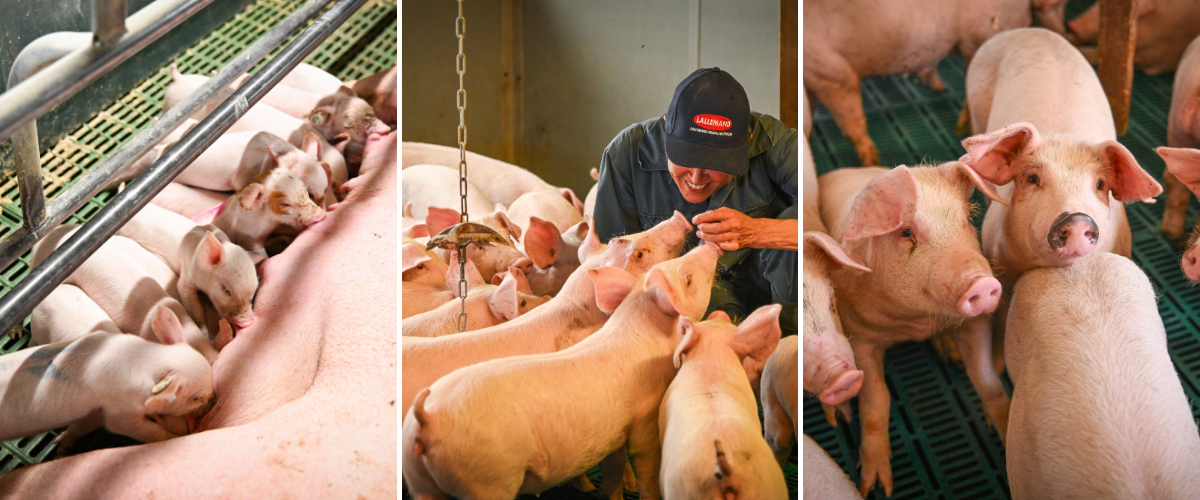
Physiological stress – such as heat, transport, feed changes, gestation, and lactation – can disrupt gut health. Probiotics help maintain digestive health and resilience, benefitting both sows and piglets, especially during stressful periods like farrowing and weaning.
All dry sows, lactating sows, and breeding gilts on the farm therefore receive the probiotic Levucell SB, a monogastric-specific live yeast.
“We’ve been using Levucell SB for around 10 years. We had issues in our indoor sows, and it was suggested to me that we try Levucell SB, so we decided to try it, and it works. Levucell SB supports gut health,” Karen recalls. After introducing the probiotic, they saw significant improvements in the sows.
Reducing antibiotic use
Karen is committed to minimising antibiotic use, aligning with industry goals. “I am very interested in the reduction of antibiotics because I know they are detrimental to gut health,” she says. “My aim, using things like Levucell SB, is to reduce antibiotic use, firstly because it’s very important that we do that, but also because I know it’s supporting our pigs’ (gut) microbiota, our pigs’ gut health, and therefore, it’s helping to support the natural defences of our pigs.”
Karen’s aim is to avoid them where possible, although sometimes antibiotics are necessary.
A holistic approach to farming
The Thompsons’ strategy combines gut health management, sustainable feed production, and minimal antibiotic use, all underpinned by diversification.
“By investing in animal health and infrastructure, we’re building a foundation for future generations,” Karen explains.
Diversification: Moss Valley Fine Meats
After the foot-and-mouth outbreak in the early 2000s, the family diversified by launching an on-site butchery. Today, Moss Valley Fine Meats employs five staff, operates five days a week, and attends weekend markets. About 20% of the herd is processed on-site, with the rest going to Cranswick.
The butchery supplies local restaurants, cafes, and farmers’ markets, adding value at every stage.
“It’s a circular process – we grow the feed, raise the pigs, and hand customers a sausage in a bun,” says Karen.
Need some help?
Contact our teamPublished Jan 13, 2026 | Updated Feb 16, 2026