Blog | Reading Time 2 minutes
Farmer Experience: Using a biological bedding conditioner to support a successful calf rearing system
Scottish farmer Sally Williams has introduced biological bedding conditioner, EazyBed Dry, as part of an initiative to support calf health and welfare at Clackmae Farm.
Managing 1,200 head of cattle, with up to 100 calves at peak times, Clackmae Farm has focused on reducing bacterial and protozoal issues within its calf-rearing system.
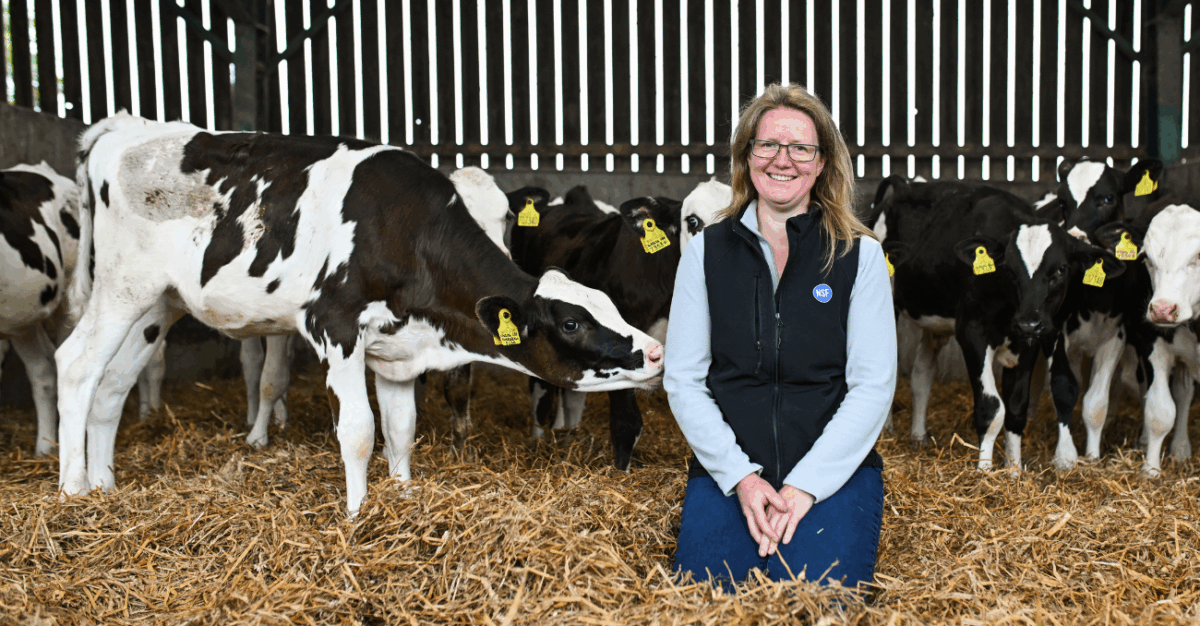
Sally explains:
“We started using EazyBed Dry a couple of years ago when we were facing challenges in our calves.
“A health challenge is a reflection on youngstock management – so I wanted a proactive calf health strategy to futureproof our calves.
“We have a top-notch calf rearer who is really motivated, making sure everything is done right for every calf, every time – our calf mortality rate is now less than 0.5%.”
Strict hygiene protocols are followed on the farm, particularly when it comes to calf housing. Calves are housed in pairs in hutches that are mucked out, disinfected, and exposed to UV light for at least three weeks before new calves move in.
Sally says they apply EazyBed Dry to the calf bedding three times a week to maintain a healthy microbial balance.
“It’s made a big difference in helping us maintain bedding quality.
She adds, “Applying EazyBed Dry is an important part of our process.
“The product supports the growth of beneficial microbes, which helps us maintain a cleaner calf housing environment.
“It’s also a gentle bedding product for people to handle.”
Bedding hygiene is one of the many management factors that all combine to help improve calf health, welfare, and performance at Clackmae Farm.
Sally notes:
“EazyBed Dry has become a key part of our overall strategy to ensure our calves stay healthy and robust. It’s definitely helped us reduce the risk of health challenges in our calf housing.”
For more information on how EazyBed Dry can benefit your calf-rearing system, click here.
NEED SOME HELP?
Contact our team
Published Mar 1, 2026 | Updated Mar 17, 2026