Blog | Reading Time 3 minutes
Rethinking bedding: Preserving Barn Hygiene with Microbial solutions
Livestock bedding does much more than provide comfort. It acts as a living ecosystem where biological and chemical processes constantly take place. The microbial activity within bedding can affect animal health, air quality and even manure quality.
Traditionally, bedding management has focused on moisture control, cleanliness and regular renewal. Interest is growing in biological solutions that harness natural microbial processes. Applying beneficial bacteria and enzymes helps maintain bedding quality, reduce odors and ammonia emissions, create a healthier environment for animals and workers, and enhance the fertilizing value of manure.
How bacterial bedding solution works
Bacterial bedding solutions use carefully selected bacteria that can be combined with enzymatic compounds. When applied to bedding areas or surfaces, these microorganisms colonize the area and initiate a beneficial environment.
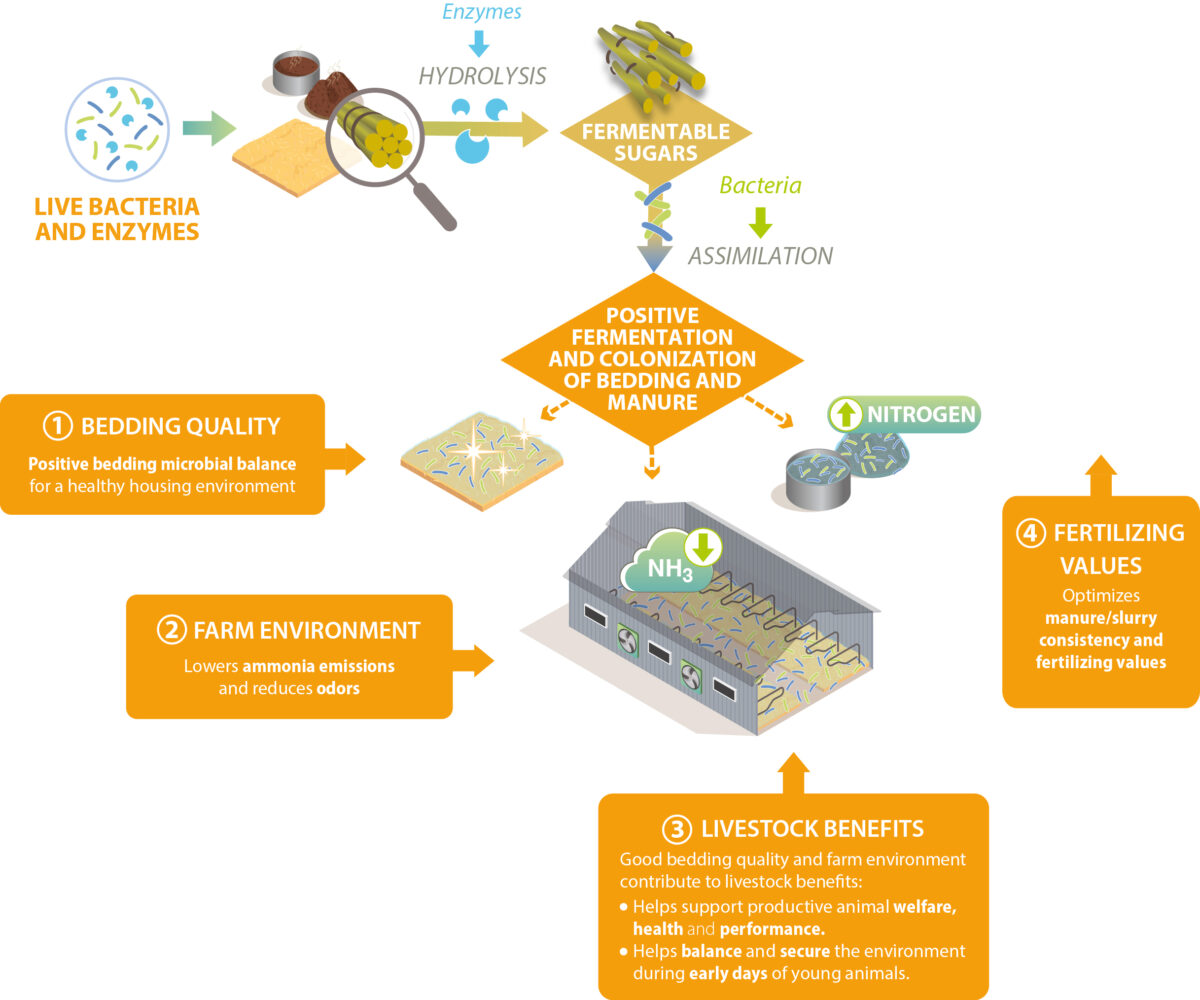
The enzymes, either added directly or produced by the bacteria themselves, break down fibrous organic matter into simpler fermentable sugars. Then, a highly concentrated blend of bacteria, including lactic acid bacteria and Bacillus, uses these fermentable sugars to promote robust bacterial growth and fermentation. The result is a more stable, balanced microbial environment where beneficial bacteria thrive and naturally limit the development of harmful ones (Figure 1).
Figure 1. The mechanism of microbial bedding solutions
Bedding quality and animal welfare
The bedding quality positively correlates with animal welfare and productivity.1 Dry, comfortable and microbially balanced bedding supports natural behavior and rest quality.
The impact of bedding quality extends across the entire production cycle. In young animals, stable microbial conditions can help limit early exposure to harmful bacteria and contribute to smoother growth and stronger immune development.
Whether in ruminants, swine or poultry, the same principle applies: when bedding is biologically active in the right way, it helps create a more balanced and resilient microbial environment.
Improving air quality and reducing ammonia
One of measurable outcomes of microbial bedding management is the reduction of ammonia (NH₃) emissions. Ammonia is released when urea and nitrogen-rich organic matter are broken down by undesirable microbial activity. Elevated ammonia can irritate animals’ respiratory systems and increase susceptibility to disease.
By fostering beneficial fermentation, inoculated bedding helps prevent the loss through ammonia emission and retain the nitrogen. This means cleaner farm environment that supports livestock benefits and helps maintain the fertilizing value of manure. Nitrogen retained in the bedding solution rather than volatilized as ammonia represents both a healthier farm environment and valuable nutrients preserved for soil application.
Implementation recommendations
For optimal results, consider these practical approaches:
Integration with management: Microbial solutions complement rather than replace good bedding fundamentals. Adequate bedding quality and quantity, proper ventilation and appropriate stocking density remain essential.
Application timing: Apply solutions early and regularly in the bedding cycle to allow beneficial bacteria to maintain the microbial balance of bedding.
Looking forward
Microbial and enzymatic bedding solutions enhance rather than replace standard routines. Regular cleaning, ventilation and moisture control remain essential.
Farmers adopting this approach often note longer-lasting bedding, fewer odor problems and more consistent conditions throughout the housing period. Ultimately, the combination of biological and practical management helps keep both animal comfort and farm efficiency while improving the long-term livestock systems.
References
1 Dunière, Lysiane, Bastien Frayssinet, Caroline Achard, Eric Chevaux, and Julia Plateau. 2024. “Conditioner Application Improves Bedding Quality and Bacterial Composition with Potential Beneficial Impacts for Dairy Cow’s Health.” Microbiology Spectrum 12 (4): e0426323. https://journals.asm.org/doi/10.1128/spectrum.04263-23
Published Feb 16, 2026 | Updated Feb 26, 2026