Blog | Reading Time 3 minutes
Managing post weaning challenges: A streamlined toolbox for piglet success
David Saornil, Lallemand global swine application manager

The first week after weaning remains one of the most difficult transitions in swine production. Piglets face abrupt dietary, microbial and social changes while digestive and immune systems are still developing. With reduced reliance on antimicrobials and zinc oxide, producers are turning to natural, science based tools to support this critical phase.
Key Takeaways
- Environmental microbiomes matter: Applying a positive biofilm after cleaning helps stabilise nursery microbial ecosystems.
- Gut resilience is essential: Support microbial balance, immunity and oxidative stress control to improve post weaning outcomes.
A holistic toolbox for post weaning
Modern strategies integrate environment, gut health and nutrition to address the multifactorial stressors piglets experience after weaning.
From hygiene to microbial ecosystem management
Standard cleaning removes both harmful and beneficial microbes, leaving surfaces vulnerable to colonisation by pathogens such as E. coli and Clostridium. Lallemand researchers have introduced an additional step: applying beneficial Bacillus and lactic acid bacteria after disinfection. These organisms form a protective, positive biofilm that limits pathogen attachment and growth. Field results show this contributes to maintaining a safe microbial environment in the farm building, ultimately producing better piglet performance and lower mortality in the early post weaning period.
Building resilience before weaning
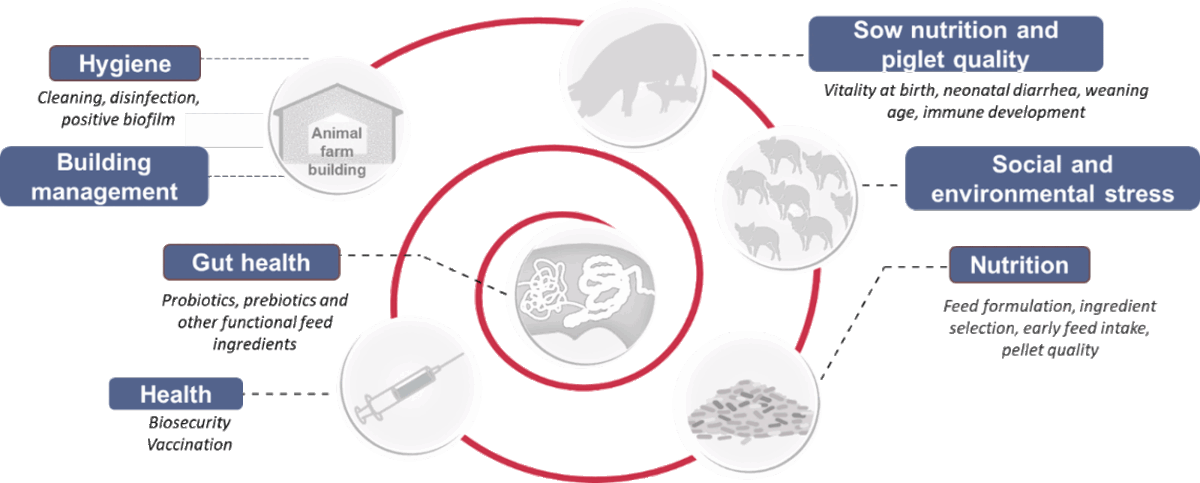
Sow gut microbiota influences piglet immune and microbiota development. Adjusting sow nutrition during gestation and lactation can enhance colostrum quality, support early microbial colonisation and reduce neonatal diarrhea (Figure 1). This combined with appropriate weaning age, vaccination and adequate birth weight further prepare piglets for the milk to feed transition.
Figure 1: A holistic approach to address the multifactorial challenge of
post-weaning
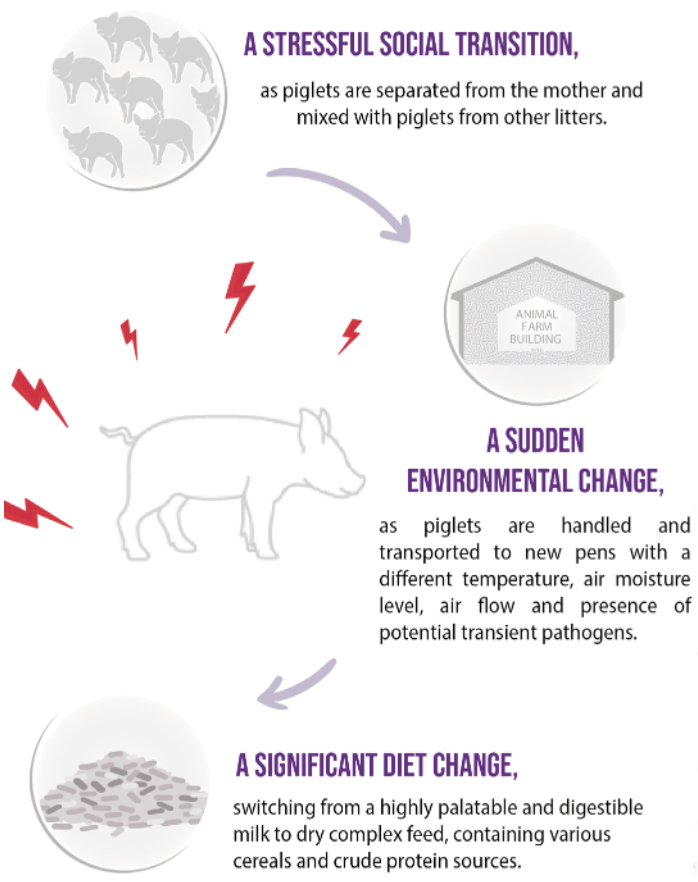
Early exposure to solid feed before weaning—commonly referred to as creep feeding —encourages voluntary intake and facilitates adaptation to post-weaning diets. (Figure 2) This pre-weaning preparation reduces the temporary anorexia that often exacerbates digestive stress immediately after weaning.
Figure 2. Serial external stresses around weaning
Belgian trial: integrating gut health support
A 2025 Belgian study with 447 piglets tested microbial strategies to control gut inflammation. Supplementation with the probiotic yeast Saccharomyces cerevisiae var. boulardii CNCM I 1079 reduced biomarkers of intestinal inflammation (fecal calprotectin, salivary haptoglobin) and improved gut barrier function. Piglets also showed better feed conversion, daily gain and final weight, delivering a strong economic return.
Precision nutrition for immature digestive systems
During weaning, low stomach acidity and limited enzyme production increase the risk of undigested proteins fermenting in the hindgut. Hydrolysed yeast ingredients provide highly digestible peptides that young piglets absorb efficiently, and recent trials show they can boost intake by 17% in the first post weaning week3.
Hydrolysed yeast also contain balanced fermentable fibre to support beneficial hindgut microbes and encourage production of SCFAs such as butyrate, which strengthen intestinal cells and immunity.
Managing oxidative stress
Weaning, viral challenges and social changes can trigger oxidative stress, weakening immunity and slowing post-weaning recovery. Selenium enriched yeast and natural sources of superoxide dismutase (SOD) help reinforce antioxidant defences, reducing mortality and improving performance under heat or viral stress3.
Conclusion
Swine production is moving from chemical based approaches, toward strategies that work with natural microbiota and physiology. By combining improved hygiene, effective vaccination, strong biosecurity and precision nutrition, producers can build piglet resilience, enhance health and meet evolving regulatory and consumer expectations.
Published Mar 24, 2026